NASA Starling Mission Proves Spacecraft Can Navigate Autonomously Without GPS
The Starling mission's FALCON technology successfully guided spacecraft using onboard systems alone, a potential breakthrough for deep-space operations.
Key points
- NASA's Starling mission demonstrated autonomous spacecraft navigation without GPS.
- The technology involved is called FALCON, tested as part of the Starling mission.
- The demonstration has implications for future deep-space missions where GPS is unavailable.
Why it mattersGPS signals do not reach beyond Earth's immediate vicinity, meaning spacecraft operating in deep space must rely on other methods to determine position and trajectory. A proven autonomous navigation system could reduce dependence on ground-based tracking and enable more independent, responsive spacecraft operations in future missions.
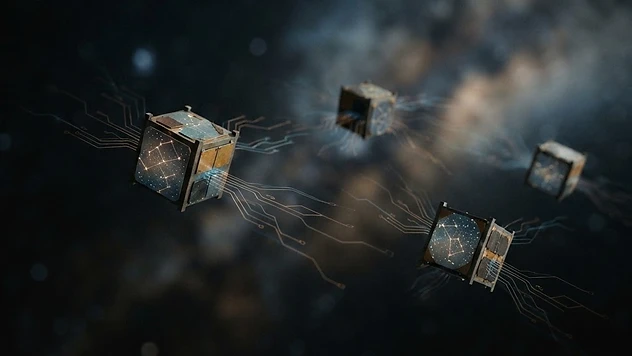
NASA's Starling mission has successfully demonstrated that spacecraft can navigate autonomously without relying on GPS, according to reporting published in late August 2026. The technology at the center of the demonstration is known as FALCON, which allowed the spacecraft to determine its position and navigate using onboard systems rather than ground-provided signals.
The test represents a meaningful step for space navigation technology. GPS infrastructure does not extend to deep space, and missions traveling beyond Earth orbit have historically depended on ground stations to calculate and relay navigational data back to the spacecraft.
By demonstrating that a spacecraft can perform these functions independently, NASA's Starling mission opens a path toward more self-sufficient spacecraft capable of operating in regions where communication delays or signal absence would otherwise limit navigational accuracy.
The demonstration was reported by SSBCrack News on August 27, 2026, with additional coverage appearing in Live Science on August 29, 2026. Further technical details about the specific methods used by FALCON to replace GPS-derived positioning had not been fully detailed in available sources at the time of publication.
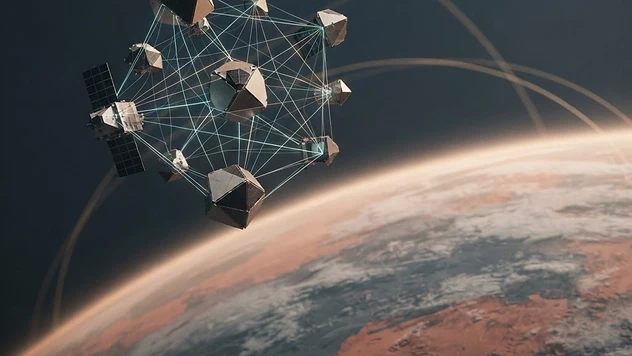
The broader Starling mission has been focused on testing technologies related to small spacecraft swarms and autonomous operations. The successful GPS-free navigation test adds to a body of work aimed at expanding what small and independent spacecraft systems can achieve without continuous human or infrastructure support.
NASA has not announced a follow-on mission or deployment timeline connected to the FALCON demonstration based on currently available reporting. The story remains developing as further technical results from the Starling mission are expected to be released.
Reported by
- SSBCrack News — NASA's FALCON Demonstrates Autonomous Spacecraft Navigation Without GPS · 2026-08-27
- Live Science — Latest science news and articles for those with curious minds · 2026-08-29